

Running after 40 can be one of the best things you do for your health, energy, and mental wellbeing.
But one of the most common questions is:
how often to run after 40?
The answer is: it depends.
Your ideal running schedule will vary based on:
- your running experience
- your recovery ability
- your fitness goals
- whether you’re training for a race
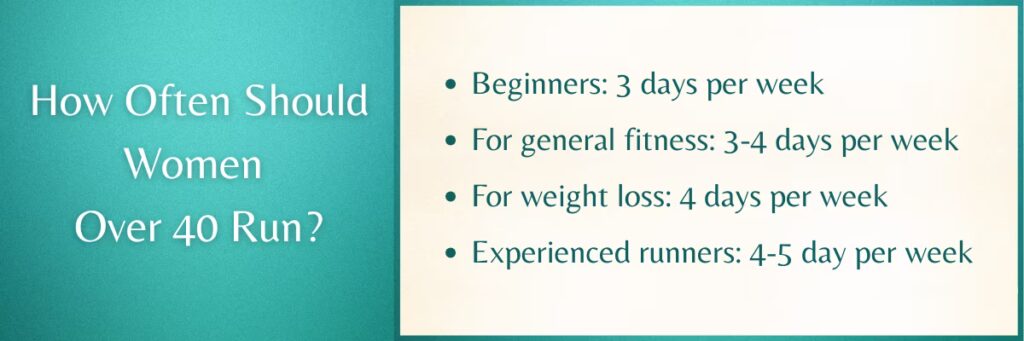
Understanding how often to run after 40 can help you build a routine that supports both progress and recovery. For most women over 40, a good general guideline is running 3–4 days per week. This is usually enough to improve endurance and fitness while still giving your body the recovery time it needs.
As we get older, recovery becomes just as important as training. Running every day isn’t necessary for progress, in fact, many runners improve more when they include rest and other types of movement into their running weeks.
How Often to Run After 40: Finding the Right Weekly Routine
If you’re unsure how often to run after 40, starting with three to four runs per week is usually a good balance.
This schedule provides enough training stimulus to improve cardiovascular fitness while still allowing your body to recover between runs.
Many runners assume they need to run almost every day to improve. In reality, the body gets stronger during recovery, not during the workout itself. When you give your body time between runs, your muscles get a chance to repair, adapt, and gradually become more resilient.
Running slightly less often, but consistently, often leads to better long-term progress than trying to run every day.
Another advantage of running three to four times per week is that it leaves room for other types of movement that support running performance, such as:
- strength training
- walking or hiking
- mobility work
- cycling or other low-impact exercise
Including other types of exercise is called cross-training. These activities help build overall fitness while reducing repetitive stress on joints and tendons.
Of course, the ideal schedule can vary depending on your experience level and goals. A beginner runner will usually need more recovery time than someone who has been running for years.
Beginner Runners: 3 Days Per Week
If you’re new to running or returning after a long break, three running days per week is usually ideal.
This schedule gives your body time to adapt gradually to the impact of running, reducing the risk of injuries such as shin splints, knee pain, or plantar fasciitis.
Running places repeated stress on muscles, tendons, and joints. When you’re just starting out, these tissues need time to strengthen and adjust. Spacing your runs throughout the week gives your body time to recover and rebuild between workouts.
A three-day schedule also makes running feel more manageable, especially if you have work, family, and other responsibilities. Many beginners find that running every other day helps them stay consistent without feeling exhausted or overwhelmed.
“A simple routine you can maintain is more powerful than a perfect plan you can’t.”
Feeling that running fits into your life is essential when you’re building a new habit. If your schedule feels too demanding from the start, it’s much easier to lose motivation, skip runs, and eventually give up altogether. A manageable routine makes it far more likely that you’ll keep showing up week after week.
Running progress doesn’t come from a few intense weeks of training, it comes from months and years of consistency. Starting with a schedule that feels realistic and sustainable helps you avoid burnout and gives your body time to adapt gradually.
In the long run, a simple routine you can maintain is far more powerful than an ambitious plan that quickly becomes overwhelming.
A simple beginner running schedule could look like this:
| Day | Activity |
|---|---|
| Monday | Easy run or run-walk |
| Wednesday | Easy run |
| Saturday | Slightly longer run |
On the days between runs, gentle movement like walking, stretching, or light strength training can support your progress and help prevent injuries. You could include:
- walking
- gentle mobility work
- strength training
- rest
If you’re just starting out, you may enjoy following a structured beginner plan like my Gentle Couch to 5K for Beginners Over 40, which helps you build running endurance safely.
Running for Fitness: 3–4 Days Per Week
If your goal is overall health, energy, and cardiovascular fitness, running 3-4 times per week works very well.
This allows you to gradually improve endurance without placing too much stress on your body.
With this frequency, you can include a mix of different types of runs throughout the week. For example, you might do a couple of easy runs, one slightly longer run, and possibly one run where you briefly pick up the pace for short sections. This could mean running a little faster for a few minutes at a time or adding a few short bursts of quicker running within an otherwise comfortable run. This variety helps improve both endurance and running efficiency while keeping your training interesting and prevent boredom.
“Running slightly less often, but consistently, leads to better long-term results.”
Running three to four times per week also leaves room in your schedule for other important forms of movement, such as strength training, walking, or mobility work. These activities can support your running, help prevent injuries, and contribute to overall fitness.
Over time, this kind of consistent and manageable routine can lead to significant improvements in both physical and mental wellbeing.
A typical week could look something like this:
| Day | Activity |
|---|---|
| Tuesday | Easy run |
| Thursday | Easy run with intervals |
| Saturday | Long run |
| Sunday | Optional recovery jog or walk |
Many runners find that a structure like this helps them stay consistent without feeling burned out.
Running for Weight Loss: 4 Days Per Week
Many women begin running after 40 because they want to lose weight or improve body composition.
While running can support weight loss, consistency and overall activity levels matter more than simply running every day.
For most women, the best approach is 3–4 runs per week combined with strength training or walking. This combination helps increase overall calorie expenditure while also increasing muscle mass and metabolism.
Strength training becomes particularly important after 40, as maintaining muscle helps keep your metabolism healthy, supports joint stability, and helps protect bone density, which naturally declines with age. Walking on non-running days can also be a powerful tool for increasing daily movement without placing additional stress on the body.
Rather than focusing on running as much as possible, it’s usually more effective to build a balanced routine that includes running, strength work, and regular movement throughout the week. Over time, this approach is more sustainable and often leads to more weight loss and better long-term results.
Example schedule:
| Day | Activity |
|---|---|
| Monday | Run |
| Wednesday | Strength training |
| Thursday | Run |
| Saturday | Long run |
| Sunday | Walk or mobility |
Fueling your body properly also makes a big difference. If you’re unsure how to eat around your runs, you might find my guide on what to eat before, during, and after long runs helpful.
Experienced Runners: 4–5 Days Per Week
If you have been running for years and tolerate higher training loads well, you may feel comfortable running 5 days per week.
Many experienced runners structure their training like this:
- two easy runs
- one faster workout or hill session
- one long run
- optional recovery jog
This kind of structure allows you to balance different types of training throughout the week. Easy runs help maintain mileage and support recovery, while a faster workout or hill session can improve strength, speed, and running efficiency. The long run builds endurance and is often a key part of training for longer distances such as half marathons or marathons.
Even experienced runners benefit from at least one or two non-running days each week to allow proper recovery. Rest days give muscles, tendons, and joints time to repair and adapt, which ultimately helps prevent overuse injuries and increases long-term progress.
Many experienced runners also include strength training, mobility work, or low-impact cross-training to stay strong and reduce injury risk while maintaining a higher running volume.
Why Recovery Becomes More Important After 40
Many runners notice that recovery changes slightly with age. This is completely normal.
Several factors can influence recovery in midlife:
- Hormonal changes
Fluctuations in hormones during perimenopause and menopause can affect energy levels, muscle recovery, sleep, and how the body responds to training. - Increased life stress
Many women in midlife are balancing demanding careers, family responsibilities, and other pressures. Stress affects the nervous system and can make recovery from workouts slower. - Sleep disruptions
Changes in sleep patterns are common in midlife. Since sleep is when much of the body’s recovery and repair takes place, poor sleep can affect how quickly you bounce back after runs. - Slower tissue repair
Muscles, tendons, and connective tissues may take slightly longer to repair after exercise compared with younger years, which makes recovery days more important.
This doesn’t mean you can’t train hard. It simply means that rest days become an important part of your training.
Spacing out your runs and listening to your body helps reduce the risk of overuse injuries and gives your body the time it needs to adapt to training. Over time, this balanced approach helps many runners stay healthy, consistent, and able to keep running for years to come.
As we get older, recovery becomes just as important as training. Giving your body time between runs allows it to repair, adapt, and become more resilient.
Signs You May Be Running Too Much
Running too often without adequate recovery can lead to fatigue or injury. When the body doesn’t have enough time to repair and adapt between runs, small problems can gradually build up and eventually affect both performance and motivation.
Signs you may need more recovery include:
- Constant fatigue
Feeling unusually tired most days, even after easy runs, can be a sign that your body isn’t fully recovering from your training load. - Persistent soreness
Mild soreness after a workout is normal, but soreness that lingers for several days or never seems to fully disappear may indicate that your muscles need more recovery time. - Small aches that don’t go away
Minor aches in areas like the knees, hips, Achilles tendon, or feet can sometimes develop when training stress accumulates. Ignoring these early warning signs can increase the risk of injury. - Declining performance
If runs start to feel harder than usual or your pace slows despite consistent training, it may be a sign that your body is fatigued rather than getting fitter. - Lack of motivation to run
Mental fatigue can also be a signal that your body needs more rest. If you normally enjoy running but suddenly feel reluctant to go out, it may be worth taking an extra recovery day.
Reducing your running frequency slightly or adding an extra rest day can often restore energy and help your body adapt.
Finding the right balance of training and recovery is key when deciding how often to run after 40.
The Biggest Running Mistake Women Over 40 Make
One of the most common mistakes runners make is trying to run too often too quickly.
Many people assume they need to run five or six days per week to improve. In reality, this often leads to fatigue, frustration, or injury.
Running three or four well-structured sessions per week usually leads to better long-term progress.
Don’t underestimate the power of rest and recovery. Consistency beats intensity every time.
FAQ: Running After 40
Is it safe to run every day after 40?
For most women, running every day is not necessary and can increase injury risk. Running three to four days per week provides excellent health benefits while allowing time for recovery.
Can beginners start running after 40?
Yes. Many women start running in their 40s or later and experience major improvements in health and fitness. Beginning with a gradual run-walk program helps build endurance safely.
Does running get harder after 40?
Some runners notice slower recovery or changes in energy levels. However, consistent training, good sleep, and strength work can help maintain strong running performance well into midlife and beyond.