

Starting running after 40 can feel exciting and intimidating at the same time.
Maybe you haven’t exercised in years.
Maybe your body feels different than it did in your 20s.
Maybe you’re carrying extra weight, dealing with hormonal changes, or simply unsure where to begin.
But there’s good news!
You can absolutely start running after 40. Many women even discover they run smarter and more consistently now than ever before.
Here’s how to begin safely, sustainably, and confidently.
Find Your “Why” Before You Start Running After 40
Now before you get out there and start, pause for a little bit. Ask yourself: Why do I want to do this?
Is it weight loss?
Stress relief?
Energy?
Confidence?
Bone health?
A sense of something that’s yours?
Your “why” matters more than you might think. Your time may be limited. Your body now has history. Running needs to serve your life, not compete with it.
When your motivation dips (and some days it will), your “why” is what carries you through cold mornings, busy weeks, and low-energy days. Not discipline or willpower but meaning.
Your “why” doesn’t have to be anything huge or dramatic. It can be as simple as:
“I want to feel strong in my own body again”
“I want more energy for my everyday life”
“I want to handle stress better”
“I want to feel proud of what my body can do”
“I want to build strength for the decades ahead”
“I want to feel physically and mentally stronger”
Something very simple. That’s enough.
But your “why” can also be a matter of improving your current health like:
“I want to lower my blood pressure in a natural way”
“I want to keep my diabetes under control”
“I want to improve my depression”
Those are of course very valid too, just make sure you are being looked after by a physician who can help you do it the right way for your health and monitor you.
What’s Different About Running After 40?
Starting running after 40 isn’t all that different from running when younger but it does take a little different approach. Our bodies have changed and are still changing but there is nothing magical about turning 40, 50 or 60 that makes running unsafe or impossible.
A few things do change:
- Recovery speed – You might notice you need an extra day between harder runs or that you feel more fatigued after speed work or have lingering soreness in your legs or core
- Muscle mass and bone density – After 30, women gradually lose muscle mass (sarcopenia), and bone density begins to decline. This process accelerates during and after menopause. For runners, this can mean: Slightly reduced power or speed and increased injury risk if strength training is neglected.
- Hormonal fluctuations – In your 40s, cycles may become irregular. Estrogen and progesterone fluctuate more dramatically. This can affect energy levels, heart rate, perceived effort, mood and thermoregulation. Some weeks you may feel strong and capable. Other weeks, everything feels harder for no obvious reason.
- Stress tolerance – Many women in their 40s are balancing careers, caregiving, family, and emotional load. On top of that, hormonal shifts can make the nervous system more reactive to stress.
High training load + high life stress = elevated injury and burnout risk.
You may notice: Feeling overwhelmed by sessions that once felt manageable, greater mental fatigue and increased sensitivity to cold, poor sleep, or busy schedules. - Sleep patterns – Sleep often becomes lighter and more fragmented after 40. Perimenopause can bring night waking, temperature shifts, or difficulty falling asleep. Poor sleep directly affects recovery, hormone regulation, appetite signals, motivation and injury risk.
When You Start Running After 40 – The Big Picture
Running over 40 isn’t harder because you’re weaker. It’s different because the variables are different.
When you respect recovery, strength, hormones, stress, and sleep, you don’t just maintain performance, you build resilience for decades.
Running after 40 isn’t about pushing through discomfort. It’s about building gradually and consistently and respecting adaptation time.
Step 1: Start Slower Than You Think You Should
This is the biggest mistake beginners over 40 make. You do not need to “prove” your fitness or push yourself as much as you can. You really shouldn’t at this point.
If you’re starting running at 40 as a woman, your first goal is consistency, not speed.
If you’ve been sedentary for a while or if you have health issues, you should start with brisk walking for the first few weeks. Once you’re comfortable walking for 20-30 minutes, you can start adding in short running sections into your walk.
A simple beginner structure could look like this:
| Week | Frequency | Warm-Up | Main Set | Total Time |
| Week 1 | 3 x per week | Walk 5 min | Run 1 min / Walk 2 min – repeat | 20–30 min |
| Week 2 | 3 x per week | Walk 5 min | Run 2 min / Walk 2 min – repeat | 20–30 min |
| Week 3 | 3 x per week | Walk 5 min | Run 3 min / Walk 2 min – repeat | 25–35 min |
| Week 4 | 3 x per week | Walk 5 min | Run 5 min / Walk 2 min – repeat | 25–35 min |
It may feel easy, that’s intentional. Your tendons, bones, and connective tissue need time to adapt, especially if you’ve been sedentary. Fitness improves faster than tendons, bones and connective tissue which is why injury is so common when people increase too fast.
For the gentle couch to 5k in 12-16 weeks, click here
Step 2: Focus on Time, Not Distance
Instead of chasing miles or kilometers, focus on time on your feet.
In the first 4–6 weeks:
- Run 20–30 minutes total
- 3 days per week
- Increase running intervals gradually
Many women who start running after 40 get injured because they increase distance too quickly. It’s tempting to think in terms of miles or km — 1 mile, then 2, then 3 — but distance can quietly push you to run longer than your body is ready for. Each mile takes quite a few minutes and often that increase is more than your body is ready for.
Time-based training keeps intensity and load more controlled.
After 40, adaptation takes slightly longer. Muscles may feel ready before tendons and ligaments are fully prepared. Slow progression allows your bones, joints, and connective tissue to strengthen alongside your cardiovascular fitness.
This is especially important for women navigating perimenopause or menopause, when recovery capacity and tissue resilience can shift.
Slow progression isn’t holding you back. It’s building durable fitness.
Consistency over 6 months matters far more than pushing for distance in the first 6 weeks.
Step 3: Strength Training Is Not Optional After 40
If you’re serious about wanting to start running after 40, strength training is essential.
After 40, women naturally begin to lose muscle mass and bone density. Estrogen plays a protective role in muscle and bone health, and as levels fluctuate in perimenopause and decline after menopause, we have to be more intentional about maintaining strength.
Running helps, especially for lower-body bone density, but it’s not enough on its own.
Endurance training improves your cardiovascular fitness.
Strength training protects your structure.
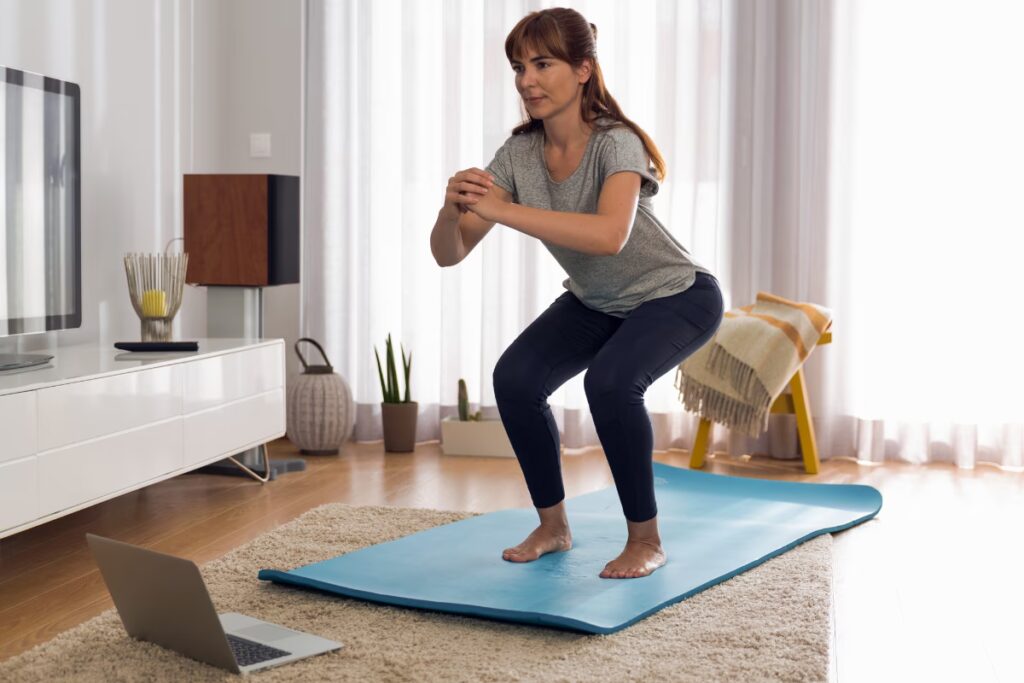
Aim to add 2 short strength sessions per week, focusing on:
- Glutes
- Hamstrings
- Core
- Single-leg stability
- Basic upper body strength
Strong glutes and hamstrings reduce strain on the knees.
A stable core supports posture and running efficiency.
Single-leg work improves balance and coordination.
Upper body strength helps maintain spinal health and overall resilience.
After 40, injuries are rarely about “being weak.” They’re usually about imbalance and accumulated stress.
Strength training builds the durability that allows you to keep running consistently and consistency is what creates long-term progress.
Because running after 40 isn’t just about getting fit. It’s about staying strong for the decades ahead.
For more about strength training for runners over 40, click here
Step 4: Expect Your Body to Feel Different
When you start running after 40, it may feel different than it did at 25.
You might notice: More stiffness in the morning, slower recovery after harder runs, energy fluctuations or increased sensitivity to poor sleep.
This is all normal. It doesn’t mean something is wrong or that you’re failing.
Hormones, stress load, life responsibilities, and recovery capacity all change in midlife. You may have less tolerance for high intensity on back-to-back days. You may need more sleep than you did before. You may feel amazing one week and unusually tired the next.
This is just basic physiology that we have to accept and respect by adapting our training to it.
It’s now more important than ever to include recovery days, easy effort runs, adequate fueling and flexibility in our weekly plan.
Progress after 40 is rarely linear. Some weeks you’ll feel strong and powerful. Other weeks will require adjustment.
Many women discover that once they stop trying to train like their 25-year-old self, they become more consistent and consistency is what ultimately builds strength, endurance, and confidence.
Step 5: Choose the Right Goal
Your first goal should be something small and attainable in the near future, not a full marathon.
Start with something realistic and achievable, like:
- Running continuously for 20 minutes
- A local 5K
- A couch to 5K program over 12-16 weeks (Get the plan here)
Small wins build momentum.
After 40, confidence often matters more than intensity. When you set a goal that feels manageable, you give yourself the opportunity to succeed early. That success creates belief and belief gives you the power and motivation to stay consistent with your training.
Many women who start running at 40 eventually go on to run half marathons or even full marathons. But that doesn’t need to be the starting goal. Even if it is in the back of your head, you should have smaller goals along the way.
When you allow yourself to begin with a smaller goal, you’re not thinking small, you’re building a foundation and foundations are extremely important.
The goal is to create a sustainable relationship with running, one that fits your life, supports your health, and grows with you over time. One that makes you excited to get out there and run, not dread it.
How Long Does It Take to See Results When You Start Running After 40?
Most beginners notice:
- Improved mood within 1–2 weeks
- Increased stamina within 3–4 weeks
- Physical changes within 6–8 weeks
The first changes are often mental, not physical. Many women notice clearer thinking, better stress tolerance, and improved sleep before they see visible changes in their body.
Cardiovascular adaptations happen relatively quickly. Your heart becomes more efficient, your breathing feels easier, and what once felt hard starts to feel manageable.
Visible physical changes take longer, especially after 40. Hormonal shifts can influence body composition, recovery, and how quickly muscle develops. That doesn’t mean progress isn’t happening. It simply means it may look different than it did in your 20s.
Consistency matters more than intensity. Three steady months of moderate running will transform your fitness far more than three weeks of overtraining.
After 40, the real progress often shows up as:
- Better energy throughout the day
- Fewer aches and pains
- Greater resilience to stress
- A stronger, more capable feeling in your body
Results aren’t just about pace or weight, they’re about how you feel living inside your body. And that kind of progress compounds over time.
Common Fears About Starting Running after 40
“Am I too old to start running?”
No.
“What if I’m the slowest person out there?”
Slow running is still running. You’re already faster than everyone home on their couch. Pace is irrelevant. Effort matters. Every experienced runner you see once started exactly where you are. The only difference is time and consistency.
The courage to start is what matters. Be proud of yourself!
“Will running damage my knees?”
Research consistently shows that recreational running does not increase the risk of knee osteoarthritis in healthy individuals. In fact, runners often have a lower occurrence of knee OA compared with sedentary people, and large studies show that running history by itself isn’t associated with greater arthritis risk — factors like age, previous injury, and body weight are more important predictors. Furthermore, evidence suggests that running doesn’t accelerate structural knee OA and may be safely recommended as part of an active lifestyle (Alentorn-Geli et al., 2017; Hartwell et al., 2024; Voinier & White, 2024).
Final Advice: Build Smart, Not Fast
Starting running after 40 is not about chasing your younger self. It’s about building strength, resilience, and cardiovascular health for the next 30–40 years.
Train consistently.
Strength train.
Fuel properly.
Rest when needed.
Running after 40 should feel empowering, not punishing.
And you don’t need to be fast to be strong.
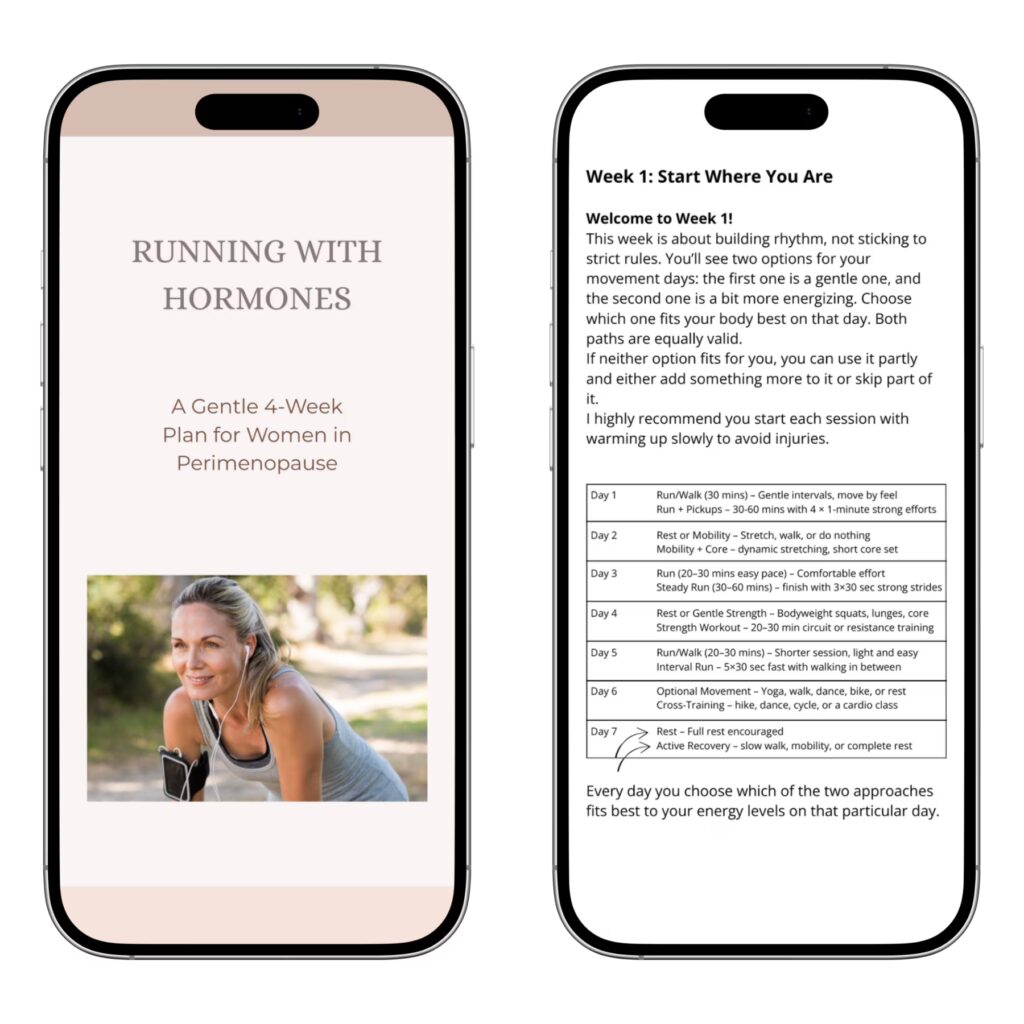
Get The Free 4-Week Training Plan
If you’d like structured guidance, download my free beginner-friendly training guide for women over 40, designed to support energy, hormones, and sustainable progress.
Reference
1. Alentorn-Geli, E., Samuelsson, K., Musahl, V., Green, C. L., Bhandari, M., & Karlsson, J. (2017). The association of recreational and competitive running with hip and knee osteoarthritis: A systematic review and meta-analysis. Journal of Orthopaedic & Sports Physical Therapy, 47(6), 373–390.
https://pubmed.ncbi.nlm.nih.gov/28504066/
2. Hartwell, M. J., Tanenbaum, J. E., Chiampas, G., Terry, M. A., & Tjong, V. K. (2024). Does running increase the risk of hip and knee arthritis? A survey of 3,804 marathon runners. Sports Health, 16(4), 622–629.
https://pubmed.ncbi.nlm.nih.gov/37555313/
3. Voinier, D., & White, D. K. (2024). Walking, running, and recreational sports for knee osteoarthritis: An overview of the evidence. European Journal of Rheumatology, 11(Suppl 1), S21–S31.
https://pmc.ncbi.nlm.nih.gov/articles/PMC11664837/?utm