
In January, I started training for my next marathon. It will be my fourth marathon, but this training cycle feels different in many ways.
I live in a cold and crappy climate so I generally do marathons in the fall so I can train in decent weather conditions (summer and beginning of fall). This time, the race is in May, which means most of my training happens in winter.
And not mild winter. Cold, windy, icy, dark winter.
On top of that, I went through burnout last fall due to personal and work-related stress. I was on sick leave for six weeks and have been rebuilding slowly since then. My nervous system is still more sensitive than it used to be, so I’m trying to train with awareness rather than just pushing through.
Here’s what the first six weeks have looked like and what I’ve learned so far.
Starting Marathon Training after 40 During Burnout Recovery
In the middle of my burnout and the first weeks of recovery, I ran about 15–25 km (9.3 – 15.5 miles) per week and did some strength training. Nothing structured. Just enough to maintain movement and routine.
When I officially started marathon training in early January, I felt surprisingly energized and eager. Last time I started training 12 weeks before the marathon but this time I started 18 weeks before. I wanted to build slowly and consistently but I accidentally made quite a big jump in the beginning because I was so energetic and eager to start.
My weekly mileage jumped to:
- 36 km (22 miles)
- 38 km (24 miles)
- 44 km (27 miles)
- 44 km (27 miles)
- 44 km (27 miles)
My long runs progressed from:
In km: 14 → 16 → 18 → 20 → 22 km.
In miles: 8.7 → 10 → 11.2 → 12.4 → 13.7 miles
I also continued two strength sessions per week, focusing specifically on runners and women over 40. At this stage of life, we’re not just building muscle, we have to protect bone density and long-term resilience so strengthening the bones is just as important as strengthening the muscles.
Looking back, that jump in mileage after four months of lower volume was a lot.
And my body let me know.
The Hunger Was Intense
I was hungry all the time, not “I could snack” hungry but “I need to eat every 2–3 hours” hungry. And I craved chocolate constantly.
The urge was so strong and like most women I was afraid of gaining weight if I listened to these signals. But I also know that underfueling is a real and common thing and it can mess with energy and training. So I gave in and ate a lot. And also a lot of chocolate. And I haven’t gained any weight so far.
When training volume increases, especially in cold weather, energy demands rise dramatically. Women over 40 are often under-fueled relative to workload. If you suddenly increase mileage, your body will ask for more. And you should listen to it and give in but also stay aware and. Choose protein-rich and complex carbohydrate options.
Fatigue Caught Up With Me
By week five, I was increasingly tired.
Some of that was training load. Some of it was work. Some of it was winter.
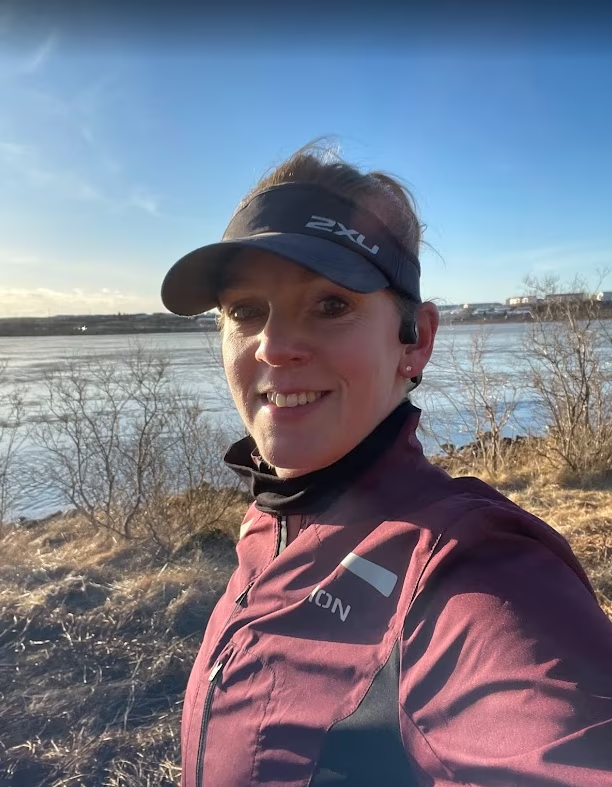
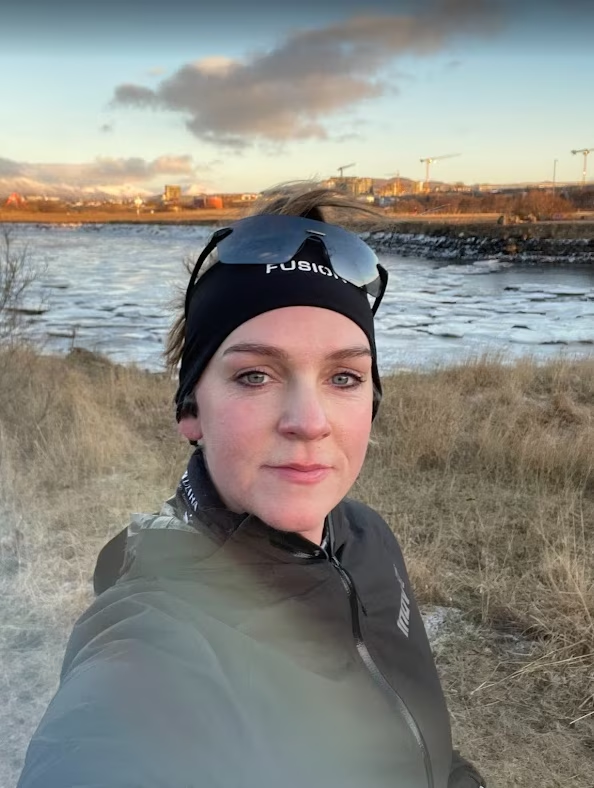
Running in -10°C (14°F) is an added stressor. Running in -5°C (23°F) with strong wind can feel even harder. Your body burns more energy, your muscles stay tighter, and your nervous system works harder.
While I feel fine during the run, after such cold runs, my body takes two hours to warm up again afterward. I just sit there wrapped in my heating blanket (life saver), drink warm tea and shiver for two hours. It takes a lot of energy out of my body.
Due to the cold and strong winds, some runs were moved indoors to the treadmill at the gym which I find incredibly boring.
By the time recovery week arrived, I was relieved. The plan was 26–30 km (16–18.6 miles). I only ran 14 km (8.7 miles).
I was just more tired than I expected and I decided to listen to that instead of pushing through which might ruin next week as well.
Training After Burnout Is Different
The biggest difference this cycle isn’t the weather, it’s my nervous system.
After burnout, recovery isn’t just about muscles and cardiovascular fitness. It’s about capacity. Capacity for stress, for load, for cold, and for work + training + life.
I’m learning that rebuilding fitness after burnout requires more flexibility and humility. Some weeks will go as planned. Some won’t.
And that’s okay but it’s really hard to accept. I’m still working on that.
What I’ve Learned So Far
1. Mileage Increases Hit Harder After 40
Even if you’ve run multiple marathons before, your body adapts differently at this stage of life. Recovery demands more respect.
2. Hunger Is Information
If you’re ravenous, your body likely needs more fuel. Especially in winter training.
3. Winter Adds Hidden Stress
Cold, wind, darkness, they all increase overall load. Factor that in when assessing fatigue.
4. Nervous System Health Matters
Training isn’t just about legs and lungs. If your system is already taxed, you can’t train as if it isn’t.

The Next 4 Weeks (Weeks 7–10)
I now have 12 weeks to go. The daylight is increasing fast, which already helps a lot mentally.
The plan:
Week 7
46 km (29 miles) total, 4 runs
Long run: 22 km (13.7 miles)
1–2 tempo or interval sessions
Strength continues (slightly lighter)
Week 8
48 km (30 miles) total
Long run: 24 km (14.9 miles)
Week 9
50 km (31 miles) total
Long run: 26 km (16.1 miles)
Week 10 (Recovery Week)
30 km (18.6 miles) total
Long run: 15 km (9.3 miles)
Only easy runs
Strength training continues, but adjusted based on energy.
The goal isn’t perfection. It’s steady, sustainable progression. And there is room for lowering the weekly km/miles if I feel drained.
Final Thoughts for Women Training in Winter after 40
If you’re training through winter, especially after a stressful period, here’s what I’d say:
- Expect your energy to fluctuate.
- Fuel more than you think you need.
- Adjust recovery weeks without guilt.
- Remember that cold weather is real stress.
- Build strength not just for performance, but for longevity.
Marathon Training in Winter after 40 is about building resilience intelligently.
And sometimes that means running 14 km instead of 30 and knowing that was the right decision.
More About Running After 40
Running After 40: What to Eat Before, During & After Long Runs
The 5 Best Running Shoes for Women Over 40: Support, Comfort, and Performance
Gentle Couch to 5K for Beginners Over 40 – A flexible 12–16 week plan